Practical fixes for busy teams

Fix the repeat work
that slows the team down.

We fix lead follow-up, inbox ownership, and repeat internal questions with one fixed first build that fits your current tools. You get a recommendation and realistic range in one reply.

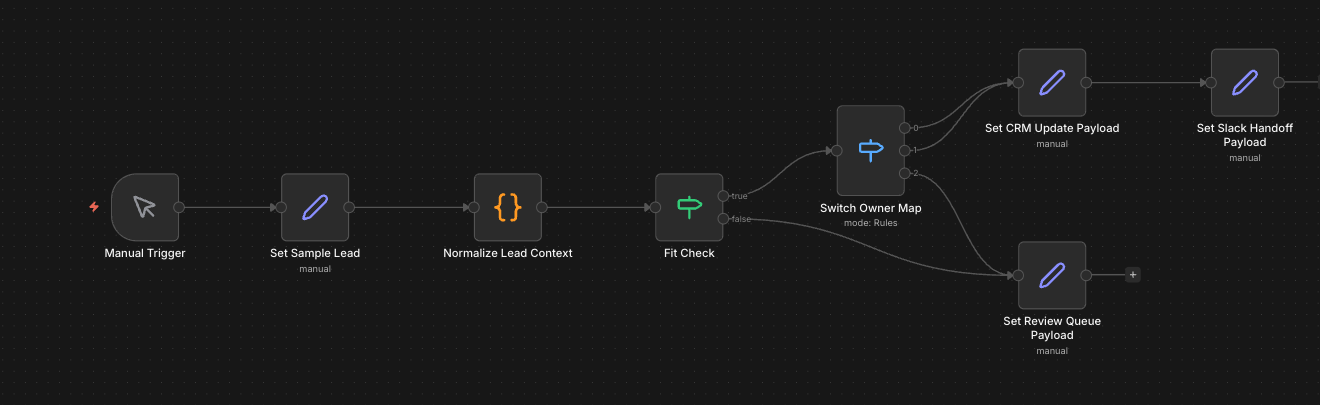
Lead follow-up automation

New inquiries get seen, checked, and handed off while they are still warm.

1
Comes in

A lead comes in through a form or email.

SourceService typeCompany context
2
Gets checked

Sales-ready? · Urgent? · Best owner?

Read the requestPull fit clues
3
Routes to

Send to sales owner · Create CRM record

4
Lands in

Slack handoff · Reply target · Cleaner queue

Human review

If the request looks thin or unusual, it can pause for review before anyone responds.

If unsure

Unclear leads are routed to review instead of being forced into the wrong owner or stage.

Get the first-build recommendation
Tell us the bottleneck. We reply within 1 business day with fit, the likely first build, and a realistic range.
What buyers usually want to knowExamples availableFixed first buildCurrent tools stayHuman reviewSupport optional
Inspectable proof builds

Inspect the first builds before you book anything.

Real workflow proof first. The service details can wait.

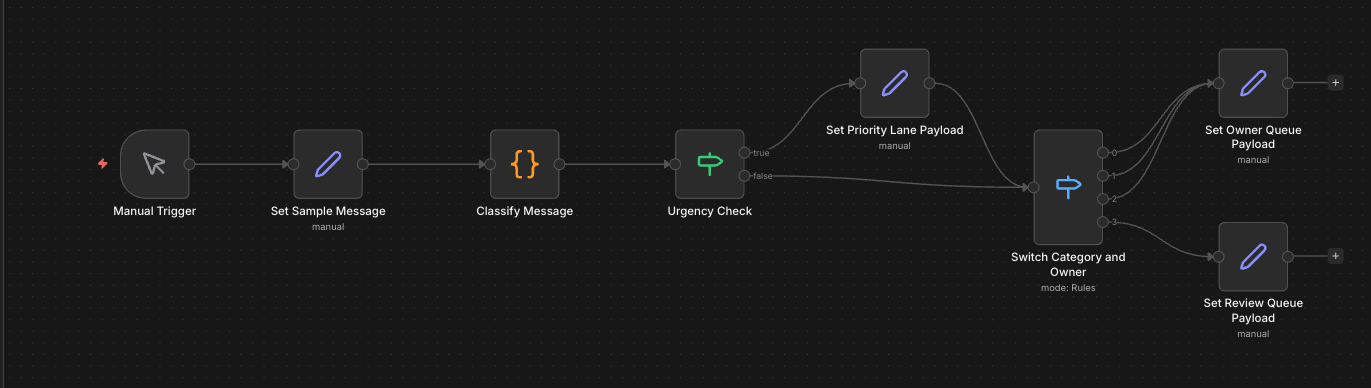
n8n canvas for the Rivet Flow shared inbox triage proof workflow
Modeled first build
Real n8n workflow

Service inbox teardown

The team stopped reading the whole queue to figure out what mattered first.

Problem

Support, service, and billing messages were mixed together, so urgent work kept getting buried under routine inbox noise.

What changed

Manual forwarding dropped and urgent requests started surfacing earlier in the day.

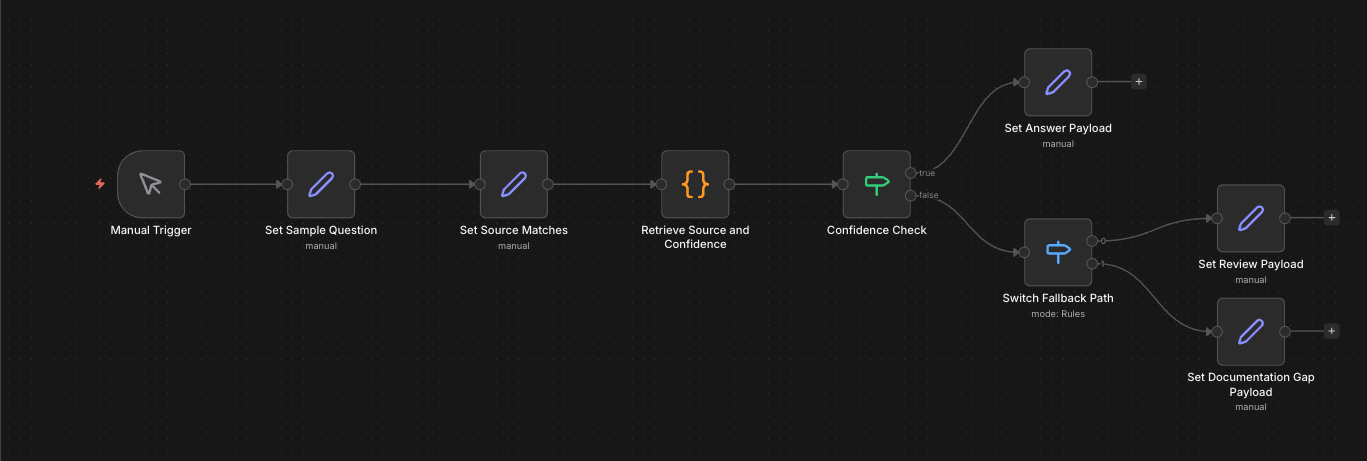
n8n canvas for the Rivet Flow internal support assistant proof workflow
Modeled first build
Real n8n workflow

Internal answer path

Answers started showing up in the flow of work with the source attached.

Problem

The same ops lead kept answering repeat delivery questions because the docs existed but nobody trusted they could find the right answer quickly.

What changed

Repeat internal questions shifted from person-first interruption to source-backed retrieval.

02. The Process

How it works.

01

A request comes in.

A form, email, or message comes in. It gets captured right away instead of sitting untouched in a shared inbox.

02

It gets sorted.

The system pulls out the important context, checks urgency, and decides where the request should go. No manual forwarding. No guessing.

03

The right person gets it.

The owner sees the request with the useful context already attached, so they can act faster and with less back-and-forth.

Why fix it now

The cost shows up before the team calls it a process problem.

Missed follow-up

Good opportunities sit too long because nobody owns the handoff clearly.

Time drain

Senior people spend part of every day sorting, forwarding, or answering the same thing again.

Messy ownership

Requests land in shared places, then disappear into back-and-forth and manual triage.

Avoidable interruption

The same bottleneck keeps breaking focus because the fix never gets built into the workflow.

Good fit

Rivet Flow works best when the bottleneck is already real.

The best first projects solve a recurring drag the team already feels every week.

The same issue shows up often enough to justify fixing it properly.

There is enough volume, urgency, or revenue tied to the problem to make the work worth doing.

Someone on your side can confirm how the current process works and who should own the outcome.

03. Pricing

Common first projects.

Most first builds land between $3k and $7k. Software fees, additional tools, and later add-ons stay separate from the first build.

Answer repeat team questions

Internal Support Assistant

Give the team one place to find reliable answers.

We turn docs, SOPs, and scattered know-how into a simple assistant that shows the source behind each answer.

Best for: Teams answering the same questions every week
What the first build includes

Connect core docs, create one entry point, and return answers with the source attached.

Moves into custom work when the source material is scattered, weak, or split across several teams.

Typical first build
$3,500-$6,000
Ask about this service
Most common

Fix lead follow-up

Lead Intake Automation

New leads stop sitting in a shared inbox.

Every inquiry gets sorted, prioritized, and handed to the right person with the right context.

Best for: Agencies and service teams losing time on follow-up
What the first build includes

Connect lead sources, add routing rules, and give the team one clear handoff path.

Moves into custom work when several teams, approval steps, or more complex routing rules are involved.

Typical first build
$4,500-$7,000
Ask about this service

Sort the inbox

Inbox Sorting

Important messages get seen first.

Incoming requests are sorted by urgency, category, and owner before the team touches them.

Best for: Busy teams buried in email and shared channels
What the first build includes

Set up one inbox or channel with categories, priority rules, and clearer ownership.

Moves into custom work when several inboxes need to merge or reporting and approvals need to be added.

Typical first build
$3,000-$5,000
Ask about this service
Business presence

Offices in San Francisco and Bangkok. Delivery worldwide.

Built from San Francisco and Bangkok for teams that need one practical first build.

Offices

San Francisco, US · Bangkok, TH

Service area

Worldwide, remote-first

Get the first-build recommendation

Tell us what needs fixing first.

One bottleneck, the current tools, and where work gets dropped is enough to start.

We reply within 1 business day with fit, the likely first build, and a realistic range.

What to send

One bottleneck, the current tools, and where work gets dropped.

What you get back

Fit, the likely first build, and a realistic range within 1 business day.